Is the 2027 Toyota bZ Stable and Composed in Everyday Driving?
September 16 2026,
Quebec driving throws a lot at a vehicle: slushy on-ramps, pothole-scarred side streets, and a highway merge that never quite gives you enough room. A daily driver should absorb all of that without asking the person behind the wheel to think twice.
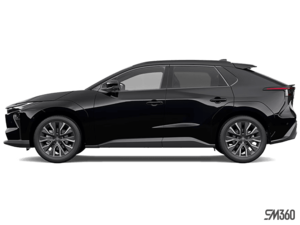
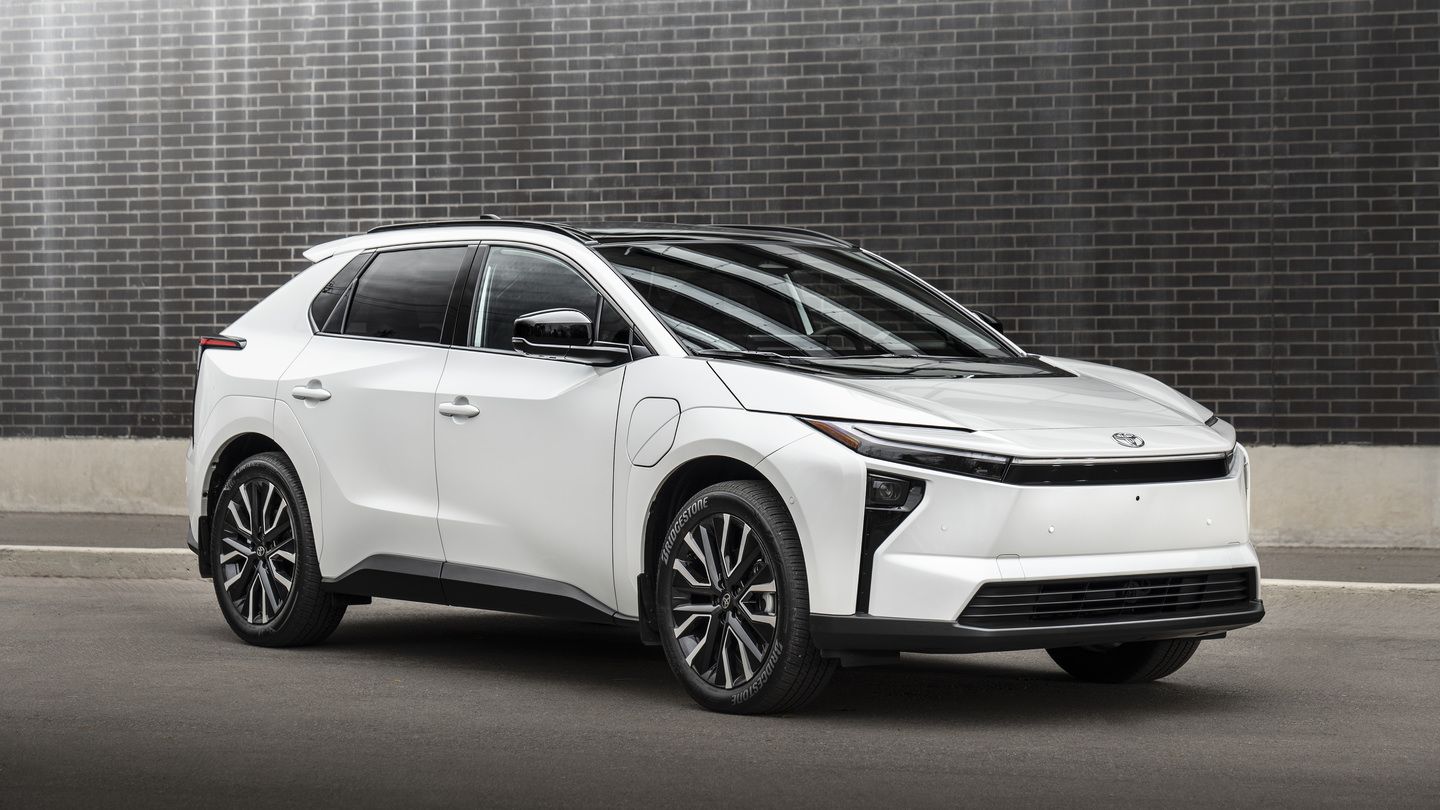
The 2027 Toyota bZ is built around that idea. Its platform, suspension, and electric powertrain are tuned less for drama and more for composure, the kind of driving character that makes a commute feel routine instead of stressful.
What the bZ’s Driving Character Is Built On
The bZ rides on Toyota’s e-TNGA platform, the same electric-vehicle architecture used across Toyota’s battery-electric lineup. It places the lithium-ion battery low in the chassis, which lowers the vehicle’s centre of gravity.
A lower centre of gravity means less body lean in corners and less weight transfer under hard braking. Combined with independent Macpherson strut front suspension and independent double wishbone rear suspension, standard on every bZ grade, the layout is designed to keep the body settled over uneven pavement rather than letting it bounce or wallow.
The bZ comes in three grades built on two powertrains: front-wheel-drive XLE, all-wheel-drive XLE, and all-wheel-drive Limited. The FWD XLE pairs a 57.7 kWh battery with a 168 hp motor and up to 380 km of range. Both AWD grades use a 77 kWh battery delivering 338 hp, with the XLE AWD rated for up to 468 km of range and the Limited AWD rated at 436 km.
How the Platform and Powertrain Work Together
An electric motor delivers its torque instantly, without the delay of gear changes or turbo lag. In practice, that means a smooth, immediate response when merging onto the highway or accelerating out of a school-zone stop, rather than a lag followed by a surge.
The two AWD grades add a second motor at the rear axle, splitting power between front and rear wheels. That setup brings Drive Mode Select with X-Mode, including Snow/Dirt, Deep Snow/Mud, and Grip Control settings, along with Multi-Terrain Select, Downhill Assist Control, and Crawl Control. The FWD XLE instead offers a Snow Drive Mode built for slippery, low-traction starts.
These modes are not about off-road ambition. They exist to manage traction when the pavement underneath is wet, slushy, or uneven, exactly the conditions a Quebec commute produces for several months of the year.
The bZ’s turning circle is 6.1 metres, which keeps three-point turns and tight parking manoeuvres manageable. Ground clearance runs 206 mm on AWD models and 211 mm on the FWD XLE, enough to shrug off a curb cut or a snowbank edge without requiring a second look.
|
Spec |
XLE FWD |
XLE AWD |
Limited AWD |
|
Battery |
57.7 kWh |
77 kWh |
77 kWh |
|
Horsepower |
168 hp |
338 hp |
338 hp |
|
Range |
380 km |
468 km |
436 km |
|
Ground clearance |
211 mm |
206 mm |
206 mm |
Why This Composure Matters on a Daily Basis

A suspension that settles quickly and a powertrain with instant response add up to less second-guessing in traffic. Stop-and-go city driving rewards a car that launches smoothly instead of lurching, and the bZ’s single-speed eAxle delivers power without a shift to manage.
Cabin details support the same goal. Front windshield and front side acoustic glass are standard on every grade, cutting down road noise on rough pavement. A SofTex-trimmed heated steering wheel and heated front seats are standard across all three grades too, so a cold start doesn’t mean a cold cabin.
Ambient lighting with 64 colours and two-zone automatic climate control round out a cabin meant to reduce fatigue on longer daily drives, not just look good in a showroom. Behind the second row, cargo volume runs 784 L, enough for a grocery run, hockey bags, or a stroller without rearranging the back seat.
Where XLE and Limited AWD Diverge
Both AWD grades share the same 77 kWh battery, 338 hp output, and traction systems, so the everyday confidence in wet or slushy conditions is the same either way. The differences sit in comfort and driver-assist depth rather than composure.
The Limited AWD adds ventilated front seats, a driver’s seat memory system, a front radiant foot-and-leg heater, and a 9-speaker JBL audio system in place of the XLE’s 6-speaker setup. It also steps up to Advanced Park, a Panoramic View Monitor, Traffic Jam Assist, and Lane Change Assist, on top of the parking sensors, blind spot monitoring, and lane tracing assist standard on every bZ grade.
For a shopper who wants AWD traction and the base safety suite, the XLE AWD covers it. For a shopper who wants the parking and lane-change assistance layered on top, the Limited AWD is the one that adds it. The FWD XLE remains the choice for a buyer prioritizing range and lower ground pressure over all-wheel traction.
Charging as Part of a Routine, Not a Road Trip
Every bZ grade uses a NACS charging port, with a Max DC fast-charging rate of 150 kW and an 11 kW onboard AC charger. A DC fast-charge session brings any grade from 10 to 80 percent in about 28 minutes, closer to a coffee stop than a lunch break.
Level 2 home charging takes roughly 7 hours on the AWD grades and 5.5 hours on the FWD XLE, which fits an overnight charge in most driveways or garages. Framed around daily use rather than long hauls, the bZ’s charging routine is built to top off overnight and top up quickly on the rare day a fast charger is needed.
See the 2027 bZ at Toyota Gatineau
The 2027 Toyota bZ pairs the e-TNGA platform, independent front and rear suspension, and AWD traction systems into a driving experience built around composure rather than spectacle. Its charging setup and cabin details are designed for routine daily use across Quebec’s changing seasons.
Visit Toyota Gatineau in Gatineau to sit in the bZ’s cabin, compare the XLE and Limited AWD grades in person, and book a test drive to feel how the platform and suspension handle Quebec roads.