Towing Rating Explained for the 2027 Toyota bZ Woodland
September 21 2026,
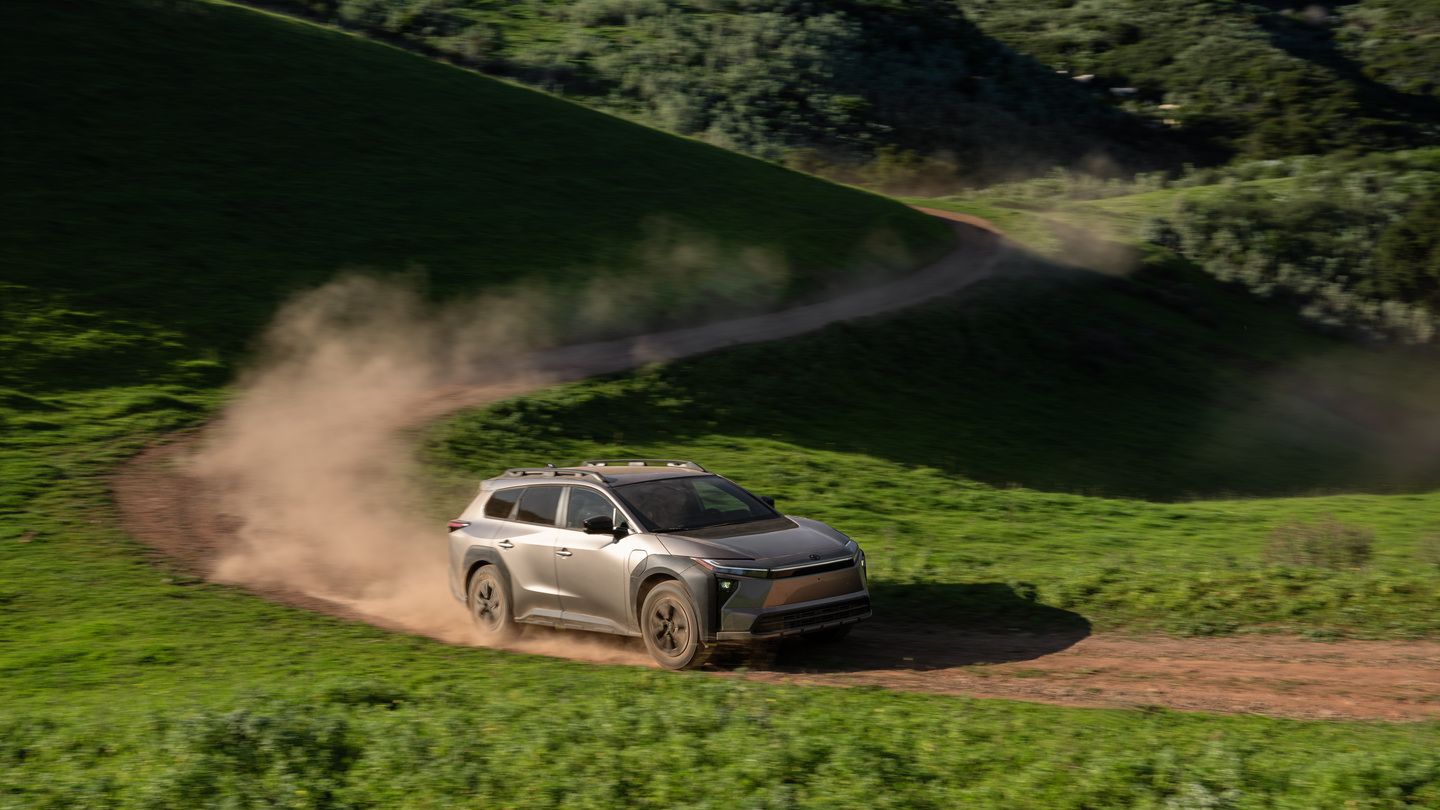
Hauling a small trailer, a couple of kayaks, or a utility trailer full of gear is a common ask for an electric SUV, and the 2027 Toyota bZ Woodland answers it with a 3,500 lb (1,588 kg) tow rating. Before you hitch up anything, it helps to know what that number actually covers and what it doesn’t.
What the 3,500 lb (1,588 kg) Towing Rating Actually Means
Think of 3,500 lbs (1,588 kg) as a ceiling, not a target. It’s the maximum the bZ Woodland can pull under ideal conditions: a light trailer, modest cargo, and a couple of passengers. Towing at or near that limit on every trip isn’t the plan; it’s the outer edge of what the vehicle can safely handle.
Trailer weight isn’t the only number that matters. The bZ Woodland carries a payload rating of 544 kg and a gross vehicle weight rating of 2,561 kg, so passengers, cargo, and tongue weight all draw from the same total. A loaded roof box or a full back seat can eat into what’s left for the trailer itself.
Conditions matter too. Steep grades, wet pavement, and a trailer with poor aerodynamics all reduce real-world range and stability well before you hit the rated maximum. Match the trailer type and load to the trip, not the spec sheet.
|
Spec |
bZ Woodland (AWD) |
|
Max towing |
3,500 lbs (1,588 kg) |
|
Payload |
544 kg |
|
GVWR |
2,561 kg |
|
Curb weight |
2,015 kg |
|
Ground clearance |
215 mm |
How the Dual-Motor AWD Setup Builds the Pull
Every bZ Woodland grade uses a dual-motor all-wheel-drive layout, one motor front and one rear, each producing 167 kW and 269 lb-ft of torque, for a combined 375 hp system output. That’s split power at both axles rather than a single motor pushing through a transfer case.
The single-speed eAxle is worth noting for towing specifically. There’s no gear to hunt for or shift through when you’re pulling away from a stop with a loaded trailer behind you; torque is available immediately, which is a different feel than a multi-speed transmission working to find the right gear under load.
Systems That Build Confidence on Slippery or Uneven Launches

Drive Mode Select and X-MODE come standard, with Snow/Dirt, Deep Snow/Mud, and Grip Control settings that adjust how power reaches each wheel. Multi-Terrain Select, Downhill Assist Control, and Crawl Mode are also standard, aimed at low-traction launches and controlled descents rather than highway cruising.
Hitching up and reversing with a trailer attached is where visibility usually gets harder, not easier. The Panoramic View Monitor and Intelligent Clearance Sonar are standard on the bZ Woodland, giving a wider view around the vehicle for lining up a hitch or backing toward a boat launch.
Cargo, Seating, and What Actually Fits
The bZ Woodland seats five, with 957 L of cargo space behind the second row and 2,104 L with the rear seats folded. For a weekend trip that pairs a trailer with gear inside the SUV itself, that’s room for coolers, bags, and outdoor equipment without touching the trailer’s own capacity.
The rear seats fold 60/40, so a longer item can go inside while shorter passengers stay seated. That flexibility matters more once a trailer is limiting what else you can strap to the roof or tailgate.
Charging and Route Planning With a Trailer Attached
Towing draws more energy than driving unloaded, so a longer trip needs a charging plan, not just a full battery at departure. The bZ Woodland uses a NACS charging port, giving access to a wide charging network, with DC fast charging up to 150 kW taking the battery from 10% to 80% in roughly 28 to 30 minutes under ideal conditions.
At home or overnight, Level 2 charging takes about 8 hours from a lower state of charge to full. A battery preconditioning system helps keep charging times consistent in cold weather, which matters for anyone planning a shoulder-season trip with a trailer in tow. Apple Maps EV Route Planning is standard, helping map out charging stops before a long haul rather than guessing along the way.
Base bZ Woodland or Premium: Which Fits Your Towing Plans
Towing hardware doesn’t change between grades; both the bZ Woodland and bZ Woodland Premium share the same dual-motor AWD, 3,500 lb (1,588 kg) rating, and payload figures. The differences sit in comfort and tire choice.
The base grade rides on P235/60R18 all-season tires and includes a 6-speaker audio system. The Premium adds a 9-speaker JBL system, ventilated front seats, a driver’s seat memory function, and a panoramic roof. The Premium can also be ordered with an All-Terrain tire package (P235/65R18), useful for rougher trailheads and boat launches, though it trims range to 418 km versus 452 km on all-season tires.
For buyers hauling on paved roads and gravel cottage lanes, the base grade covers the towing fundamentals. For anyone regularly launching a trailer over rougher terrain, the All-Terrain package on the Premium is worth discussing.
Confirming Your Setup Before You Hitch Up
The bZ Woodland’s towing rating, AWD system, and standard driver-assist tools give Quebec drivers a capable electric SUV for trailers, gear, and weekend trips. Hitch compatibility, load distribution, and trip planning still fall to the owner, so review your trailer and cargo weights against the vehicle’s limits before your first tow.
Visit Toyota Gatineau in Gatineau to walk through the bZ Woodland in person, confirm the towing equipment and trim that fit your plans, and ask about delivery timing for Quebec.